Resin and poured floors in Derby, built for the long haul.
Two-pack epoxy · Polyurethane · Self-smoothing · DPC tested · Diamond ground
Key takeaways
- 01
Two-pack epoxy at 3-4mm build, polyurethane for Derby thermal-shock zones
- 02
Diamond-ground substrate prep on every Derby pour
- 03
DPC tested before pour — no exceptions
- 04
Single-day installation for retail and small commercial fit-outs in Derby
- 05
Slip-rated R10 finish available alongside high-gloss and matt
The brief, in plain terms.
Industrial resin and poured floors in Derby cover seamless epoxy, polyurethane and self-smoothing systems installed for manufacturing, retail back-of-house and workshop environments across the DE postcode. Evolution Flooring lays diamond-prepped, 3-4mm two-pack epoxy edge-to-edge in a single working day, with high-gloss or slip-rated R10 finish and DPC-tested substrate. Derby’s industrial heritage — Rolls-Royce, Toyota, Bombardier — drives strong demand for heavy-duty resin systems across manufacturing floors, automotive workshops, rail-engineering bays and food-production environments. Founded in 2024 by Terry Keating and Nick Brawn, Evolution Flooring brings 50+ years of combined trade experience to Derby’s industrial estate — from Pride Park back-of-house and Westfield retail units to manufacturing workshops in Spondon, Sinfin and Chaddesden. Every pour is preceded by a moisture (DPC) test, diamond grind and crack repair — any compromise on prep telegraphs through the finished surface. Two-pack epoxy is mixed in measured kits, troweled and back-rolled to a 3-4mm build, then sealed for chemical and abrasion resistance. Polyurethane is specified where higher thermal-shock or chemical loading is expected — typical for Derby food-production and rail-engineering wash bays. Every project is installed personally by Terry, Nick or a tradesman trained the same way. Coverage spans DE1-DE24 plus the wider Derbyshire and East Midlands service area. The standard is a monolithic, joint-free finish that wears, cleans and sweeps to the wall.
The materials we’ll fit, by spec.
Standard ranges held against most Derby briefs. Bespoke specs available — call to discuss.
| System | Build (mm) | Finish | Slip rating | Typical use |
|---|---|---|---|---|
| Two-pack epoxy self-smoothing | 3-4 | High-gloss seal | R9 | Retail back-of-house, light industrial |
| Two-pack epoxy with broadcast quartz | 4-6 | Matt slip-rated | R10-R11 | Workshops, commercial kitchens |
| Polyurethane (PU) screed | 6-9 | Matt | R11-R12 | Heavy industrial, food production, rail wash bays |
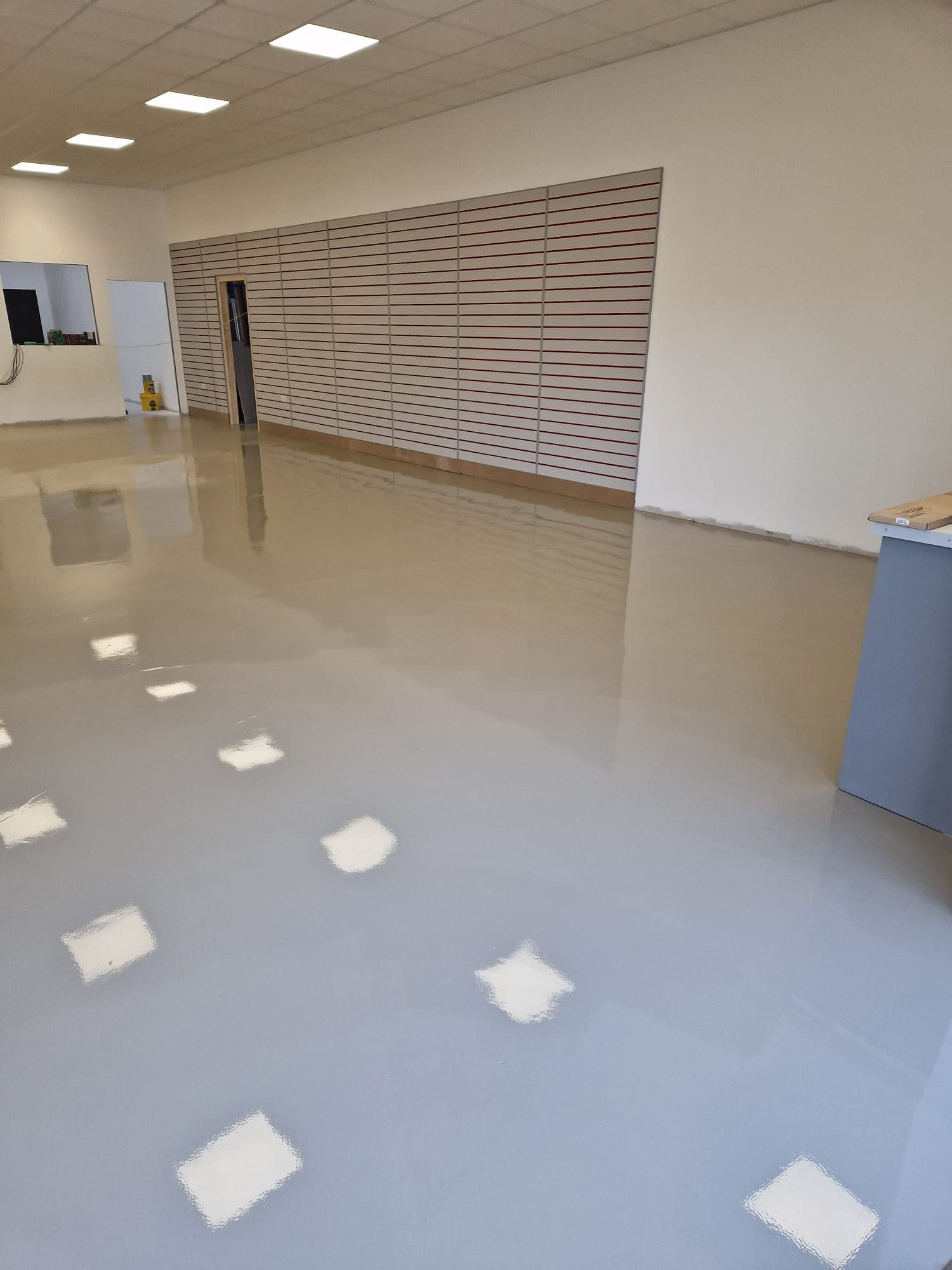
| Self-smoothing decorative | 2-3 | High-gloss | R9 | Showrooms, retail front-of-house |
| Anti-static epoxy | 3-4 | Matt | R9 | Electronics, server rooms, automotive |
From survey to handover.
- 01
Site survey
Free attendance to your Derby site. DPC moisture test, substrate inspection, take-off and system recommendation.
- 02
Written quote within 7 days
Itemised quote with system spec, build, finish and programme.
- 03
Diamond grind prep
Mechanical diamond grind to remove laitance, contaminants and create mechanical key. Cracks repaired with epoxy mortar.
- 04
Pour and trowel
Two-pack epoxy or polyurethane mixed in measured kits, poured and back-rolled to 3-4mm build edge-to-edge.
- 05
Seal and handover
Top-coat seal applied for chemical and abrasion resistance. Slip rating added where specified. Site cleaned, written guarantee issued.
What you get.
- 01Seamless, joint-free finish — sweeps clean to the wall, no edge to chip
- 023-4mm two-pack epoxy or polyurethane build to project loading
- 03DPC moisture test before every pour — substrate failure is the No.1 cause of resin failure
- 04Diamond ground substrate prep — full mechanical key, dust-extracted
- 05High-gloss, matt or R10 slip-rated finish to suit the environment
- 06Single-day install possible on retail and small commercial sites in Derby
- 0750+ years combined trade experience — Terry Keating and Nick Brawn
- 08Free site survey and written quote within 7 days
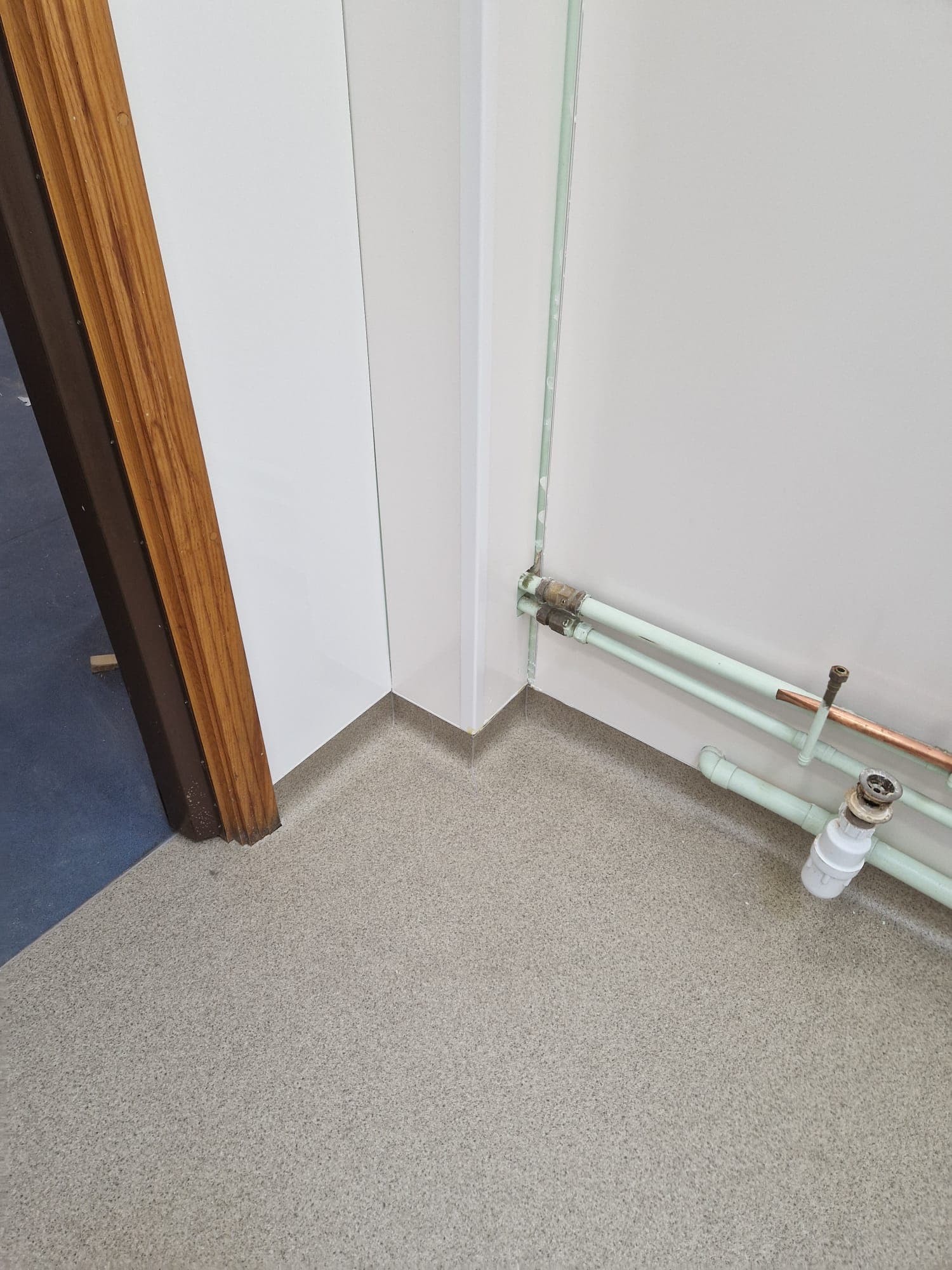
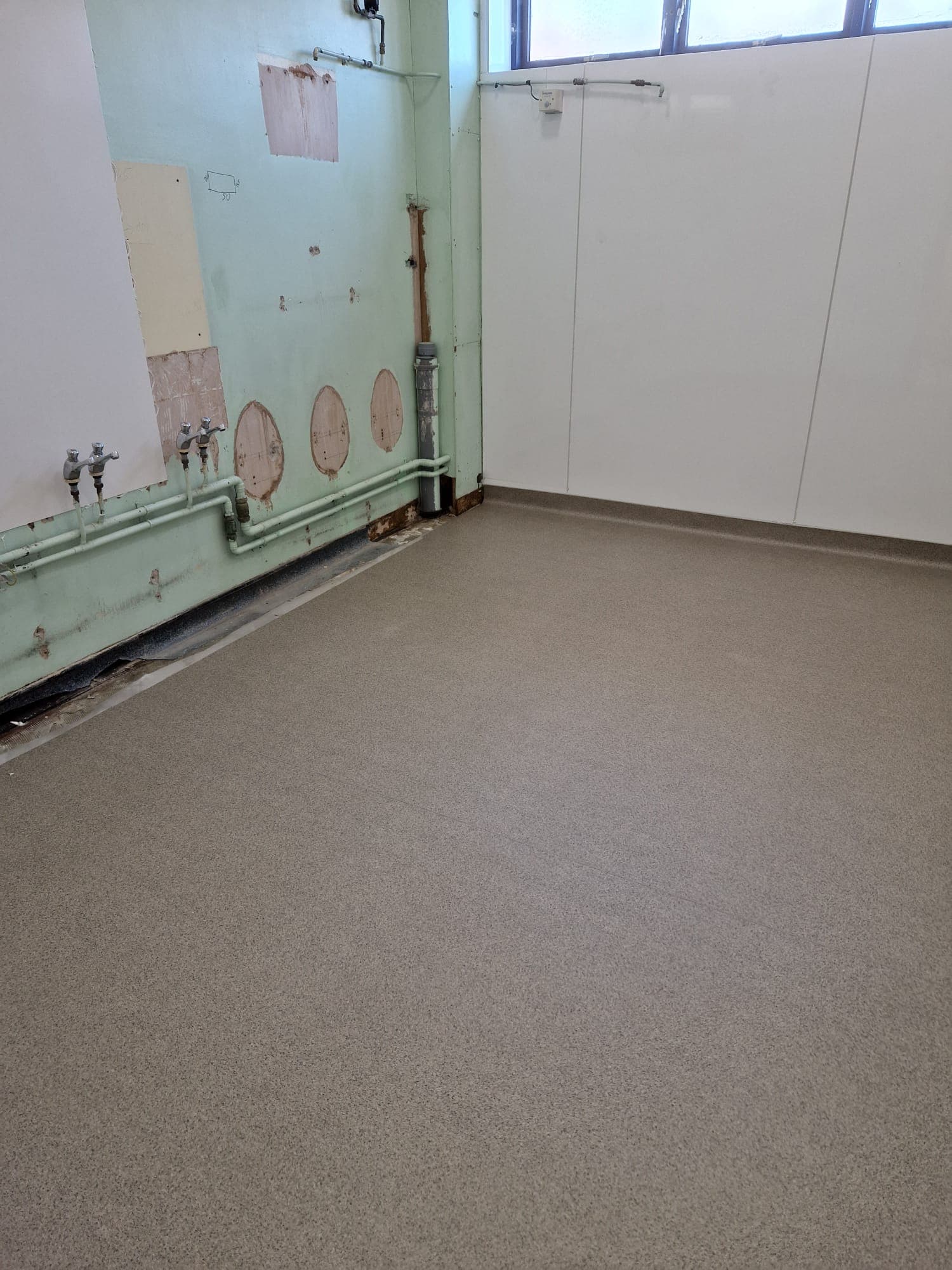
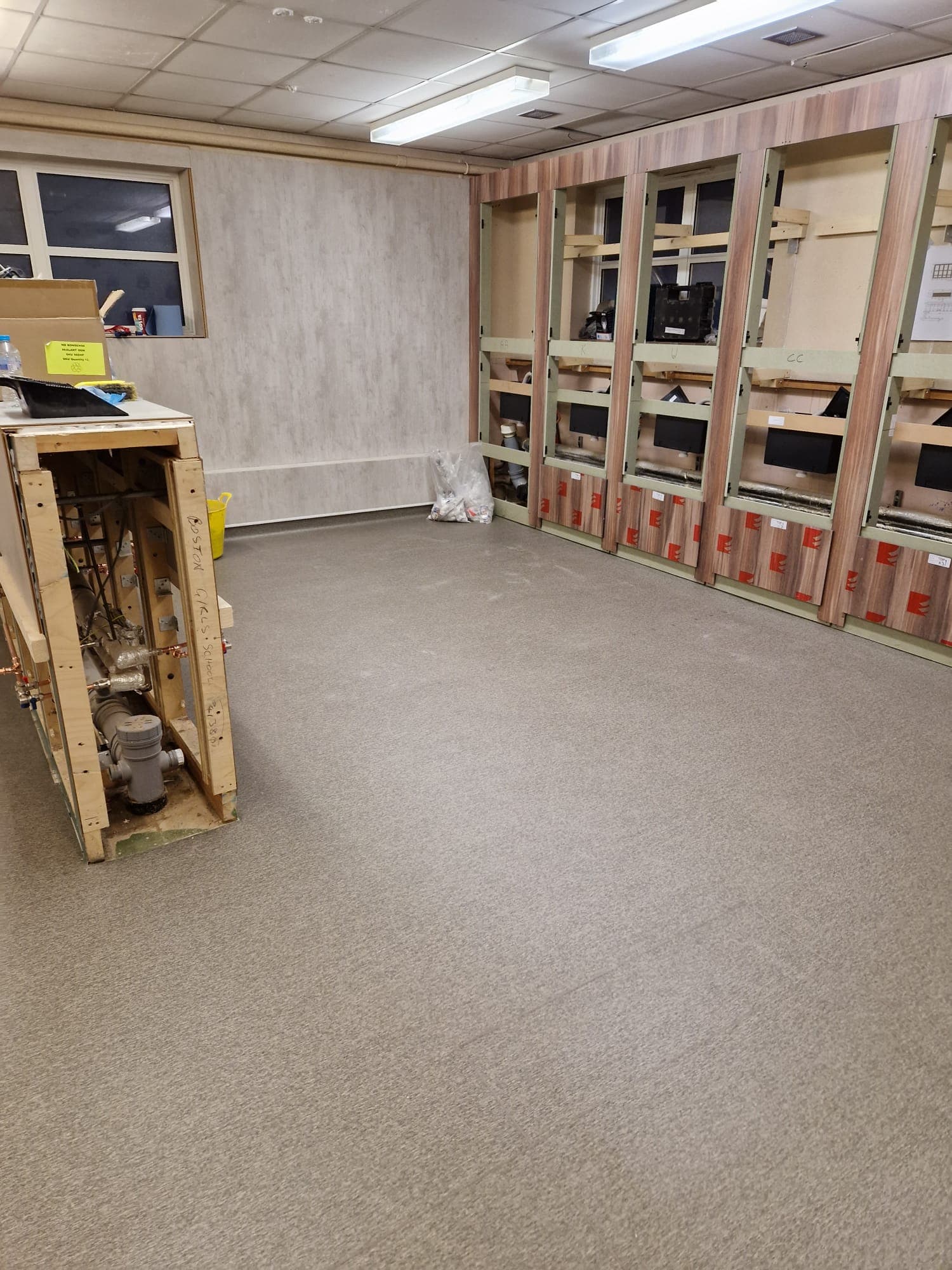
Detail that shows.
Derby questions
Resin & Poured Floors FAQs
Quick answers to the questions clients ask before booking a survey. Need something specific? Call 07766 828 730 or email evolutionflooring24@gmail.com.
How long does a resin floor installation take in Derby?
A typical 100m² Derby workshop pour is delivered in 1-2 working days, with diamond grind prep on day one and the pour on day two. Light foot traffic is allowed after 24 hours, with full chemical cure at 7 days. Larger Derby industrial pours are programmed across nights, weekends and planned shutdowns.What’s the difference between epoxy and polyurethane resin?
Two-pack epoxy is the workhorse — 3-4mm self-smoothing, hard, chemical-resistant, ideal for retail and light industrial. Polyurethane (PU) screed is thicker (6-9mm) and far more thermal-shock resistant, used in Derby food production, rail wash bays and any environment with steam-cleaning regimes. Cost rises with build and chemistry.Do you DPC test the substrate?
Yes — every pour. Damp-proof course (DPC) failure is the number one cause of resin floor failure. We test for relative humidity in the slab using calibrated probes, and only proceed when the reading is below the resin manufacturer’s specification (typically 75% RH or 5% moisture content). No exceptions.Can you install slip-rated R10 in Derby workshops?
Yes. Standard self-smoothing epoxy gives R9. Adding a quartz or aluminium oxide broadcast during the pour brings the rating to R10 or R11 — required for Derby workshops, automotive bays and wash zones. The aggregate is back-rolled in and sealed with a top-coat. Specify the rating at survey stage.Will you grind the existing floor in my Derby unit?
Yes — every project starts with diamond grinding the substrate. This removes laitance, old adhesive, contamination and surface irregularities, exposing fresh aggregate and creating a mechanical key for the resin to bond to. Dust extraction is on the grinder, so contained Derby sites stay clean during prep.Can you pour resin in Derby manufacturing during shutdowns?
Yes — planned shutdowns are the most common scheduling for Derby industrial pours. Christmas, Easter and summer shutdowns at Rolls-Royce, Toyota and Bombardier-tier sites give us a window to grind, pour and cure inside 5-7 days. RAMS, inductions and method statements are issued in advance.How long does a poured floor last in Derby industrial use?
A correctly prepped and laid two-pack epoxy floor at 3-4mm build will give 10-15 years of service in retail and light industrial use. Polyurethane in Derby heavy industrial environments runs 15-20 years before recoating is recommended. Failure almost always traces back to substrate prep or DPC failure, not the resin itself.
References
- Two-pack epoxy build of 3-4mm for self-smoothing systems — FeRFA Guide to the Specification and Application of Synthetic Resin Flooring
- Polyurethane screed build of 6-9mm for heavy industrial — Sika / Flowcrete polyurethane screed technical data
- DPC moisture test threshold — 75% RH / 5% moisture content — BS 8204-6 — Synthetic Resin Floorings — Code of Practice
- Slip resistance ratings R9-R12 for resin systems — DIN 51130 / UKSRG slip resistance guidance
- Approved Contractor status — Linx Construction — Evolution Flooring Portfolio 2026, Vol. I
Ready to brief us?
Book a free resin survey in Derby. Quote within seven days.